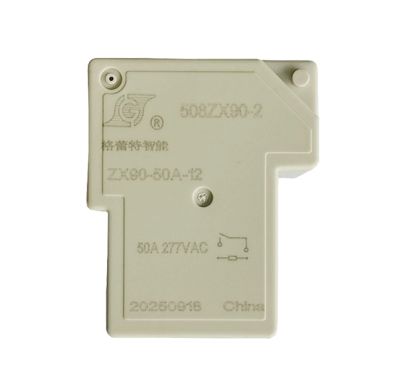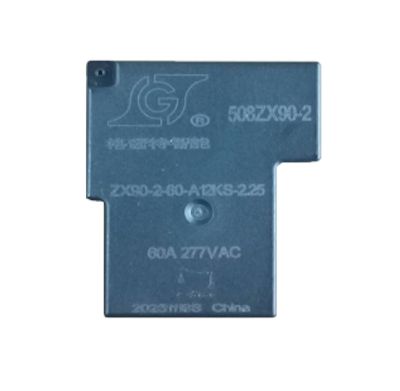
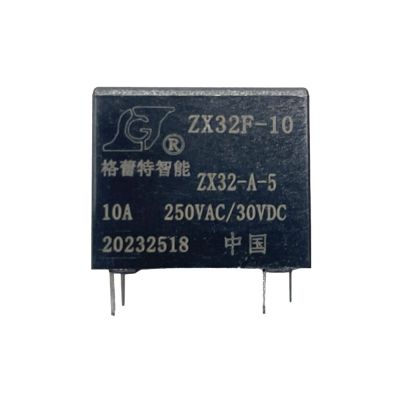
| file name | remark | update time |
|---|
| Appearance | Shell color | Black | Remarks | |||||
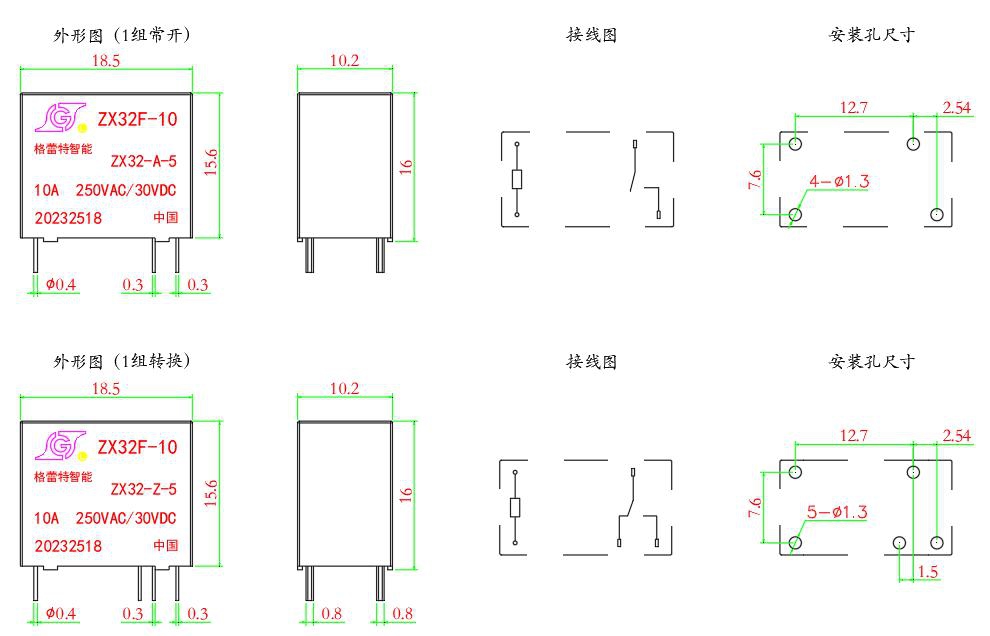
| contact | Contact form | 1A/1Z | A is of the normally open type / Z is of the transfer type | |||||
| Contact material | Silver alloy | |||||||
| Contact resistance | ≤100mΩ | ≤100mΩ (1A 6VDC) | ||||||
| Contact gap | Minimum 0.30 mm | |||||||
| Contact load (resistive) | 10A/250VAC | 10V/28VDC | ||||||
| Maximum switching voltage | 250VAC | |||||||
| Maximum switching current | 10A | |||||||
| Maximum switching power | 2500VA | |||||||
| Minimum contact capacity | 1A/6VDC | |||||||
| Maximum inrush current | 30A | |||||||
| Maximum inrush sustained current time | ≤4ms | |||||||
| Remarks: The above values are initial values. | ||||||||
| Coil parameters | Coil rated power consumption | 0.2W/0.45W | ||||||
| Coil rated current | 30mA | |||||||
| Coil Specification Table | Rated Voltage VDC | Pull-in Voltage ¹ VDC | Release Voltage ¹ VDC | Maximum Allowable Voltage² VDC | Coil resistance Ω/(at 23±1℃) | |||
| 0.2W | 0.45W | |||||||
| 5 | ≤3.75 | ≥0.25 | 6.5 | 125±10% | 55.5±10% | |||
| 9 | ≤6.75 | ≥0.45 | 11.7 | 405±10% | 180±10% | |||
| 12 | ≤9.0 | ≥0.6 | 15.6 | 720±10% | 300±10% | |||
| 18 | ≤13.5 | ≥0.9 | 23.4 | 1620±10% | 720±10% | |||
| 24 | ≤18.0 | ≥1.2 | 31.2 | 2880±10% | 1280±10% | |||
| Environmental performance parameters | Operating temperature | -40℃~105℃ | The operating temperature range represents the temperature range within which the relay can continuously operate within the operating voltage range of the coil (with no water droplet condensation at low temperatures). | |||||
| Humidity | 45%-85%RH | |||||||
| Storage temperature | -40℃~85℃ | The storage temperature range represents the temperature range within which the relay can be stored without damage (no water droplet condensation at low temperatures). | ||||||
| Mechanical vibration | Vibration durability capacity | 10~55HZ amplitude 1.0mm | Under the non-excited state, the relay is vibrated for 2 hours in each direction of the three axes with an amplitude width of 1.5mm and a frequency of 10 - 55Hz. After the experiment, there is no abnormality in the appearance structure, and the electrical performance meets the specified requirements. | |||||
| Vibration resistance (malfunction) | 10~55HZ amplitude 1.5mm | In the energized/released state, the relay has an amplitude of 1.5mm and a frequency of 10 - 55Hz. Vibrate in each direction of the three axes for 5 minutes. The contact misoperation should not exceed 1ms. After the experiment, the appearance and structure should not be abnormal, and the electrical performance should meet the specification requirements. | ||||||
| Environmental performance parameters | Mechanical shock | Impact durability capacity | 981m/S2 | The relay withstands the impacts of an acceleration of 981m/s² and a duration of 6 milliseconds in six directions of three axes twice each, and there is no abnormality in the product structure and performance. | ||||
| Shock resistance (malfunction) | 98.1m/S2 | In the energized/released state, the relay withstands the impacts of an acceleration of 98.1m/s² and a duration of 11 milliseconds in six directions of three axes twice each, and the contact misoperation does not exceed 1 millisecond. | ||||||
| Cold resistance | Cold resistance in use | When there is no input state, the relay shall be continuously maintained at a temperature of -30 ± 2℃ in the constant temperature box for 2 hours. When conducting the rated voltage test on the operating circuit in the original state, the relay should operate normally. (There is no water droplet condensation phenomenon at low temperature.) | ||||||
| Cold resistance in storage | The relay shall be continuously maintained at a temperature of -40 ± 2℃ in the constant temperature box for 72 hours. Then, after removing water droplets at normal temperature for 1 - 2 hours, conduct structure, action, insulation impedance and withstand voltage tests. The results shall meet the requirements. (There is no water droplet condensation phenomenon at low temperature.) | |||||||
| Heat resistance | Heat resistance in use | With the rated voltage supplied to the operating circuit and the rated current supplied to the contact part, the relay shall be continuously maintained at a temperature of 85 ± 2℃ for 2 hours. Conduct the relay action test in the original state, and the results must meet the specification requirements. | ||||||
| Heat resistance in storage | The relay shall be continuously maintained at a temperature of 85 ± 2℃ in the constant temperature box for 16 hours. After placing it in normal temperature and humidity for 1 - 2 hours, conduct structure, action, insulation impedance and withstand voltage tests. The results shall meet the requirements. | |||||||
| Moisture resistance | The relay shall be continuously maintained in an environment with a temperature of 40 ± 2℃ and a relative humidity of 90 - 95% for 48 hours. Then, place it in normal temperature and humidity for 1 - 2 hours, and conduct structure, action, insulation impedance and withstand voltage tests. The results shall meet the requirements. | |||||||
| End-foot characteristics | Terminal pin strength | Load 300 grams in the horizontal direction for 1 minute. After the test, the pins shall not be loose or bent. | ||||||
| Soldering test |
"The temperature is 260 ± 10℃, the time is 5 ± 0.5 seconds, the front end of the tinned terminal is 2 - 3mm, and the tin - dipping area needs to reach more than 90%. " 积需要达到 90%以上。 |
|||||||
| Solder heat resistance |
"When the terminal pins are immersed in a 350℃ tin bath for 3 seconds, the relay must meet all electrical and mechanical specification requirements, and its appearance should not change." 械规格要求,外观也不能改变。 |
|||||||
| Electrical performance parameters | Coil temperature rise | ≤35K | When the relay is unloaded, apply rated voltage to the coil. After the temperature stabilizes, measure the temperature rise, which should not exceed 35℃ (excluding the ambient temperature). | |||||
| Pull-in time (rated voltage) | ≤10ms | |||||||
| Release time (rated voltage) | ≤5ms | |||||||
| Insulation resistance | ≥1000MΩ(500VDC) | Between the open contacts, between the contacts and the coil | ||||||
| Dielectric Withstand Voltage | Contact - Contact | 1200VAC 1min | 1,200VAC,50/60 Hz (1 分钟) | |||||
| Contact - Coil | 2000VAC 1min | 2,000VAC,50/60 Hz(1 分钟) | ||||||
| Heat resistance and flame retardancy | Insulation Class F | Six-sided glow wire | ||||||
| Electrical life | 1×10⁵ | 5A 250Vac/30Vdc |
Resistive load, normal temperature conditions; Frequency: 30 times per minute, Duty cycle: 1 second on and 9 seconds off |
|||||
| 5×10⁴ | 10A 250VAC/10A 28VD | |||||||
| Mechanical life | 1×10⁷ | Number of continuous operations without load | Frequency: 300 times per minute | |||||
| Security authentication | Certification type | Test conditions | ||||||
| 0.2W | 0.45W | |||||||
| UL | NO:5A 250Vac 8A 250Vac 10A 250Vac | |||||||
| T∪V | NO:10A 250Vac/30Vdc | NO:10A/5A 250Vac/30Vdc | ||||||
| CQC | NO:10A 250Vac/30Vdc | NO:10A/5A 250Vac/30Vdc | ||||||
| Remarks: (1) For the loads without specified temperature in the table, the average ambient temperature is room temperature. (2) The detailed test conditions for each load are different, so the actual number of electrical life cycles is different. | ||||||||
| structure | Installation method | PCB board type | ||||||
| Weight | Approximately 20g | |||||||
| Packaging structure | Solder mask type | |||||||
| Sampling inspection standard | GB2828-2012 with general inspection level III and AQL - 0.65. | |||||||
| Packaging method | Incoming material packaging form | The inner packaging is packed in plastic boxes (100 pieces/box), and the outer packaging is packed in sturdy cartons (2000 pieces/carton). | ||||||
| Transportation regulations |
"During the transportation of the product, attention should be paid to preventing heavy pressure, dropping, moisture and heat." |
|||||||
Environmental performance parameters
Mechanical shock
Impact durability capacity
981m/S2
The relay withstands the impacts of an acceleration of 981m/s² and a duration of 6 milliseconds in six directions of three axes twice each, and there is no abnormality in the product structure and performance.
Shock resistance (malfunction)
98.1m/S2
In the energized/released state, the relay withstands the impacts of an acceleration of 98.1m/s² and a duration of 11 milliseconds in six directions of three axes twice each, and the contact misoperation does not exceed 1 millisecond.
Cold resistance
Cold resistance in use
When there is no input state, the relay shall be continuously maintained at a temperature of -30 ± 2℃ in the constant temperature box for 2 hours. When conducting the rated voltage test on the operating circuit in the original state, the relay should operate normally. (There is no water droplet condensation phenomenon at low temperature.)
Cold resistance in storage
The relay shall be continuously maintained at a temperature of -40 ± 2℃ in the constant temperature box for 72 hours. Then, after removing water droplets at normal temperature for 1 - 2 hours, conduct structure, action, insulation impedance and withstand voltage tests. The results shall meet the requirements. (There is no water droplet condensation phenomenon at low temperature.)
Heat resistance
Heat resistance in use
With the rated voltage supplied to the operating circuit and the rated current supplied to the contact part, the relay shall be continuously maintained at a temperature of 85 ± 2℃ for 2 hours. Conduct the relay action test in the original state, and the results must meet the specification requirements.
Heat resistance in storage
The relay shall be continuously maintained at a temperature of 85 ± 2℃ in the constant temperature box for 16 hours. After placing it in normal temperature and humidity for 1 - 2 hours, conduct structure, action, insulation impedance and withstand voltage tests. The results shall meet the requirements.
Moisture resistance
The relay shall be continuously maintained in an environment with a temperature of 40 ± 2℃ and a relative humidity of 90 - 95% for 48 hours. Then, place it in normal temperature and humidity for 1 - 2 hours, and conduct structure, action, insulation impedance and withstand voltage tests. The results shall meet the requirements.
End-foot characteristics
Terminal pin strength
Load 300 grams in the horizontal direction for 1 minute. After the test, the pins shall not be loose or bent.
Soldering test
"The temperature is 260 ± 10℃, the time is 5 ± 0.5 seconds, the front end of the tinned terminal is 2 - 3mm, and the tin - dipping area needs to reach more than 90%. "
积需要达到 90%以上。
Solder heat resistance
"When the terminal pins are immersed in a 350℃ tin bath for 3 seconds, the relay must meet all electrical and mechanical specification requirements, and its appearance should not change."
械规格要求,外观也不能改变。
Electrical performance parameters
Coil temperature rise
≤35K
When the relay is unloaded, apply rated voltage to the coil. After the temperature stabilizes, measure the temperature rise, which should not exceed 35℃ (excluding the ambient temperature).
Pull-in time (rated voltage)
≤10ms
Release time (rated voltage)
≤5ms
Insulation resistance
≥1000MΩ(500VDC)
Between the open contacts, between the contacts and the coil
Dielectric Withstand Voltage
Contact - Contact
1200VAC 1min
1,200VAC,50/60 Hz (1 分钟)
Contact - Coil
2000VAC 1min
2,000VAC,50/60 Hz(1 分钟)
Heat resistance and flame retardancy
Insulation Class F
Six-sided glow wire
Electrical life
1×10⁵
5A 250Vac/30Vdc
Resistive load, normal temperature conditions;
Frequency: 30 times per minute, Duty cycle: 1 second on and 9 seconds off
5×10⁴
10A 250VAC/10A 28VD
Mechanical life
1×10⁷
Number of continuous operations without load
Frequency: 300 times per minute
Security authentication
Certification type
Test conditions
0.2W
0.45W
UL
NO:5A 250Vac 8A 250Vac 10A 250Vac
T∪V
NO:10A 250Vac/30Vdc
NO:10A/5A 250Vac/30Vdc
CQC
NO:10A 250Vac/30Vdc
NO:10A/5A 250Vac/30Vdc
Remarks: (1) For the loads without specified temperature in the table, the average ambient temperature is room temperature. (2) The detailed test conditions for each load are different, so the actual number of electrical life cycles is different.
structure
Installation method
PCB board type
Weight
Approximately 20g
Packaging structure
Solder mask type
Sampling inspection standard
GB2828-2012 with general inspection level III and AQL - 0.65.
Packaging method
Incoming material packaging form
The inner packaging is packed in plastic boxes (100 pieces/box), and the outer packaging is packed in sturdy cartons (2000 pieces/carton).
Transportation regulations
"During the transportation of the product, attention should be paid to preventing heavy pressure, dropping, moisture and heat."
Environmental performance parameters
Mechanical shock
Impact durability capacity
981m/S2
The relay withstands the impacts of an acceleration of 981m/s² and a duration of 6 milliseconds in six directions of three axes twice each, and there is no abnormality in the product structure and performance.
Shock resistance (malfunction)
98.1m/S2
In the energized/released state, the relay withstands the impacts of an acceleration of 98.1m/s² and a duration of 11 milliseconds in six directions of three axes twice each, and the contact misoperation does not exceed 1 millisecond.
Cold resistance
Cold resistance in use
When there is no input state, the relay shall be continuously maintained at a temperature of -30 ± 2℃ in the constant temperature box for 2 hours. When conducting the rated voltage test on the operating circuit in the original state, the relay should operate normally. (There is no water droplet condensation phenomenon at low temperature.)
Cold resistance in storage
The relay shall be continuously maintained at a temperature of -40 ± 2℃ in the constant temperature box for 72 hours. Then, after removing water droplets at normal temperature for 1 - 2 hours, conduct structure, action, insulation impedance and withstand voltage tests. The results shall meet the requirements. (There is no water droplet condensation phenomenon at low temperature.)
Heat resistance
Heat resistance in use
With the rated voltage supplied to the operating circuit and the rated current supplied to the contact part, the relay shall be continuously maintained at a temperature of 85 ± 2℃ for 2 hours. Conduct the relay action test in the original state, and the results must meet the specification requirements.
Heat resistance in storage
The relay shall be continuously maintained at a temperature of 85 ± 2℃ in the constant temperature box for 16 hours. After placing it in normal temperature and humidity for 1 - 2 hours, conduct structure, action, insulation impedance and withstand voltage tests. The results shall meet the requirements.
Moisture resistance
The relay shall be continuously maintained in an environment with a temperature of 40 ± 2℃ and a relative humidity of 90 - 95% for 48 hours. Then, place it in normal temperature and humidity for 1 - 2 hours, and conduct structure, action, insulation impedance and withstand voltage tests. The results shall meet the requirements.
End-foot characteristics
Terminal pin strength
Load 300 grams in the horizontal direction for 1 minute. After the test, the pins shall not be loose or bent.
Soldering test
"The temperature is 260 ± 10℃, the time is 5 ± 0.5 seconds, the front end of the tinned terminal is 2 - 3mm, and the tin - dipping area needs to reach more than 90%. "
积需要达到 90%以上。
Solder heat resistance
"When the terminal pins are immersed in a 350℃ tin bath for 3 seconds, the relay must meet all electrical and mechanical specification requirements, and its appearance should not change."
械规格要求,外观也不能改变。
Electrical performance parameters
Coil temperature rise
≤35K
When the relay is unloaded, apply rated voltage to the coil. After the temperature stabilizes, measure the temperature rise, which should not exceed 35℃ (excluding the ambient temperature).
Pull-in time (rated voltage)
≤10ms
Release time (rated voltage)
≤5ms
Insulation resistance
≥1000MΩ(500VDC)
Between the open contacts, between the contacts and the coil
Dielectric Withstand Voltage
Contact - Contact
1200VAC 1min
1,200VAC,50/60 Hz (1 分钟)
Contact - Coil
2000VAC 1min
2,000VAC,50/60 Hz(1 分钟)
Heat resistance and flame retardancy
Insulation Class F
Six-sided glow wire
Electrical life
1×10⁵
5A 250Vac/30Vdc
Resistive load, normal temperature conditions;
Frequency: 30 times per minute, Duty cycle: 1 second on and 9 seconds off
5×10⁴
10A 250VAC/10A 28VD
Mechanical life
1×10⁷
Number of continuous operations without load
Frequency: 300 times per minute
Security authentication
Certification type
Test conditions
0.2W
0.45W
UL
NO:5A 250Vac 8A 250Vac 10A 250Vac
T∪V
NO:10A 250Vac/30Vdc
NO:10A/5A 250Vac/30Vdc
CQC
NO:10A 250Vac/30Vdc
NO:10A/5A 250Vac/30Vdc
Remarks: (1) For the loads without specified temperature in the table, the average ambient temperature is room temperature. (2) The detailed test conditions for each load are different, so the actual number of electrical life cycles is different.
structure
Installation method
PCB board type
Weight
Approximately 20g
Packaging structure
Solder mask type
Sampling inspection standard
GB2828-2012 with general inspection level III and AQL - 0.65.
Packaging method
Incoming material packaging form
The inner packaging is packed in plastic boxes (100 pieces/box), and the outer packaging is packed in sturdy cartons (2000 pieces/carton).
Transportation regulations
"During the transportation of the product, attention should be paid to preventing heavy pressure, dropping, moisture and heat."
Environmental performance parameters
Mechanical shock
Impact durability capacity
981m/S2
The relay withstands the impacts of an acceleration of 981m/s² and a duration of 6 milliseconds in six directions of three axes twice each, and there is no abnormality in the product structure and performance.
Shock resistance (malfunction)
98.1m/S2
In the energized/released state, the relay withstands the impacts of an acceleration of 98.1m/s² and a duration of 11 milliseconds in six directions of three axes twice each, and the contact misoperation does not exceed 1 millisecond.
Cold resistance
Cold resistance in use
When there is no input state, the relay shall be continuously maintained at a temperature of -30 ± 2℃ in the constant temperature box for 2 hours. When conducting the rated voltage test on the operating circuit in the original state, the relay should operate normally. (There is no water droplet condensation phenomenon at low temperature.)
Cold resistance in storage
The relay shall be continuously maintained at a temperature of -40 ± 2℃ in the constant temperature box for 72 hours. Then, after removing water droplets at normal temperature for 1 - 2 hours, conduct structure, action, insulation impedance and withstand voltage tests. The results shall meet the requirements. (There is no water droplet condensation phenomenon at low temperature.)
Heat resistance
Heat resistance in use
With the rated voltage supplied to the operating circuit and the rated current supplied to the contact part, the relay shall be continuously maintained at a temperature of 85 ± 2℃ for 2 hours. Conduct the relay action test in the original state, and the results must meet the specification requirements.
Heat resistance in storage
The relay shall be continuously maintained at a temperature of 85 ± 2℃ in the constant temperature box for 16 hours. After placing it in normal temperature and humidity for 1 - 2 hours, conduct structure, action, insulation impedance and withstand voltage tests. The results shall meet the requirements.
Moisture resistance
The relay shall be continuously maintained in an environment with a temperature of 40 ± 2℃ and a relative humidity of 90 - 95% for 48 hours. Then, place it in normal temperature and humidity for 1 - 2 hours, and conduct structure, action, insulation impedance and withstand voltage tests. The results shall meet the requirements.
End-foot characteristics
Terminal pin strength
Load 300 grams in the horizontal direction for 1 minute. After the test, the pins shall not be loose or bent.
Soldering test
"The temperature is 260 ± 10℃, the time is 5 ± 0.5 seconds, the front end of the tinned terminal is 2 - 3mm, and the tin - dipping area needs to reach more than 90%. "
积需要达到 90%以上。
Solder heat resistance
"When the terminal pins are immersed in a 350℃ tin bath for 3 seconds, the relay must meet all electrical and mechanical specification requirements, and its appearance should not change."
械规格要求,外观也不能改变。
Electrical performance parameters
Coil temperature rise
≤35K
When the relay is unloaded, apply rated voltage to the coil. After the temperature stabilizes, measure the temperature rise, which should not exceed 35℃ (excluding the ambient temperature).
Pull-in time (rated voltage)
≤10ms
Release time (rated voltage)
≤5ms
Insulation resistance
≥1000MΩ(500VDC)
Between the open contacts, between the contacts and the coil
Dielectric Withstand Voltage
Contact - Contact
1200VAC 1min
1,200VAC,50/60 Hz (1 分钟)
Contact - Coil
2000VAC 1min
2,000VAC,50/60 Hz(1 分钟)
Heat resistance and flame retardancy
Insulation Class F
Six-sided glow wire
Electrical life
1×10⁵
5A 250Vac/30Vdc
Resistive load, normal temperature conditions;
Frequency: 30 times per minute, Duty cycle: 1 second on and 9 seconds off
5×10⁴
10A 250VAC/10A 28VD
Mechanical life
1×10⁷
Number of continuous operations without load
Frequency: 300 times per minute
Security authentication
Certification type
Test conditions
0.2W
0.45W
UL
NO:5A 250Vac 8A 250Vac 10A 250Vac
T∪V
NO:10A 250Vac/30Vdc
NO:10A/5A 250Vac/30Vdc
CQC
NO:10A 250Vac/30Vdc
NO:10A/5A 250Vac/30Vdc
Remarks: (1) For the loads without specified temperature in the table, the average ambient temperature is room temperature. (2) The detailed test conditions for each load are different, so the actual number of electrical life cycles is different.
structure
Installation method
PCB board type
Weight
Approximately 20g
Packaging structure
Solder mask type
Sampling inspection standard
GB2828-2012 with general inspection level III and AQL - 0.65.
Packaging method
Incoming material packaging form
The inner packaging is packed in plastic boxes (100 pieces/box), and the outer packaging is packed in sturdy cartons (2000 pieces/carton).
Transportation regulations
"During the transportation of the product, attention should be paid to preventing heavy pressure, dropping, moisture and heat."
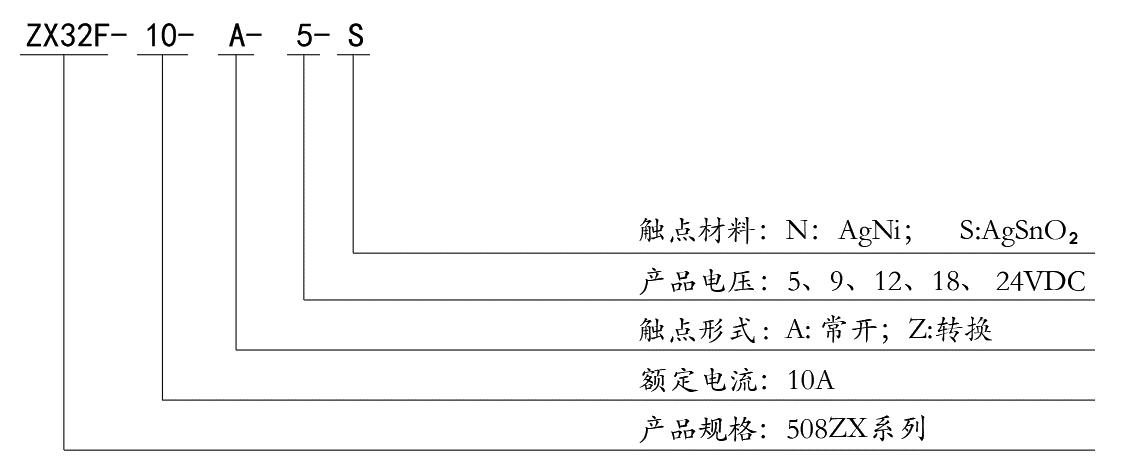
How to order:
Dimension and Diagram(unit:mm)